

If you’re considering composite decking for your garden, one of the most common questions we’re asked is: does composite decking contract and expand? The simple answer is yes; it does. Like most building materials, composite decking naturally responds to changes in temperature. However, this movement is completely normal and, when properly accounted for during installation, it won’t affect the long-term performance or appearance of your deck.
As specialists in composite decking, we always reassure our customers that expansion and contraction are expected characteristics of the material. The key is understanding why it happens and ensuring the boards are installed correctly from the outset.
What is Composite Decking Made Of?
Composite decking is manufactured from a blend of recycled wood fibres and plastics. Because it contains plastic elements, it reacts to temperature changes. In warmer weather, the boards expand slightly. In colder conditions, they contract. This movement occurs lengthways along the board and is most noticeable during seasonal temperature shifts or prolonged spells of hot or cold weather.
Why is There Movement?
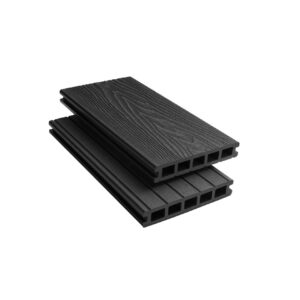
The amount of movement depends on several factors. One of the most significant is board colour. Darker composite decking boards absorb more heat from the sun than lighter shades. As a result, darker boards can experience slightly greater expansion during hot weather. This doesn’t mean you should avoid darker colours, but it does mean allowing the correct expansion gaps during installation is particularly important.
Spacing Between Deck Boards
Spacing between boards is another crucial consideration. We always recommend leaving 3mm-6mm gaps at the ends of boards and between adjoining boards to accommodate thermal movement. Without adequate spacing, boards can push against each other as they expand, potentially causing bowing or pressure on fixings. When installed with the correct clearances, the boards have room to move naturally without issue.
It’s also important to think about where your decking is being installed. When laying boards next to fixed structures such as walls, fencing or existing masonry, expansion gaps of 6mm-15mm must be left between the decking and the adjoining surface. Composite boards should never be installed tightly against a solid object. Allowing sufficient space ensures that seasonal expansion doesn’t cause unnecessary stress on the boards or subframe.
Capped or Not Capped?
The construction of the decking board itself also plays a role. Uncapped composite decking is made from a consistent composite material throughout the board. It offers durability and resistance to rot, but because the core is exposed, it can be slightly more susceptible to moisture absorption over time. Capped composite decking, on the other hand, features a protective outer polymer shell that encases the composite core. This cap adds an extra layer of protection against moisture, staining and fading. While both types will still expand and contract with temperature changes, capped boards often offer enhanced stability and long-term performance due to their protective layer.
Composite Decking Installation
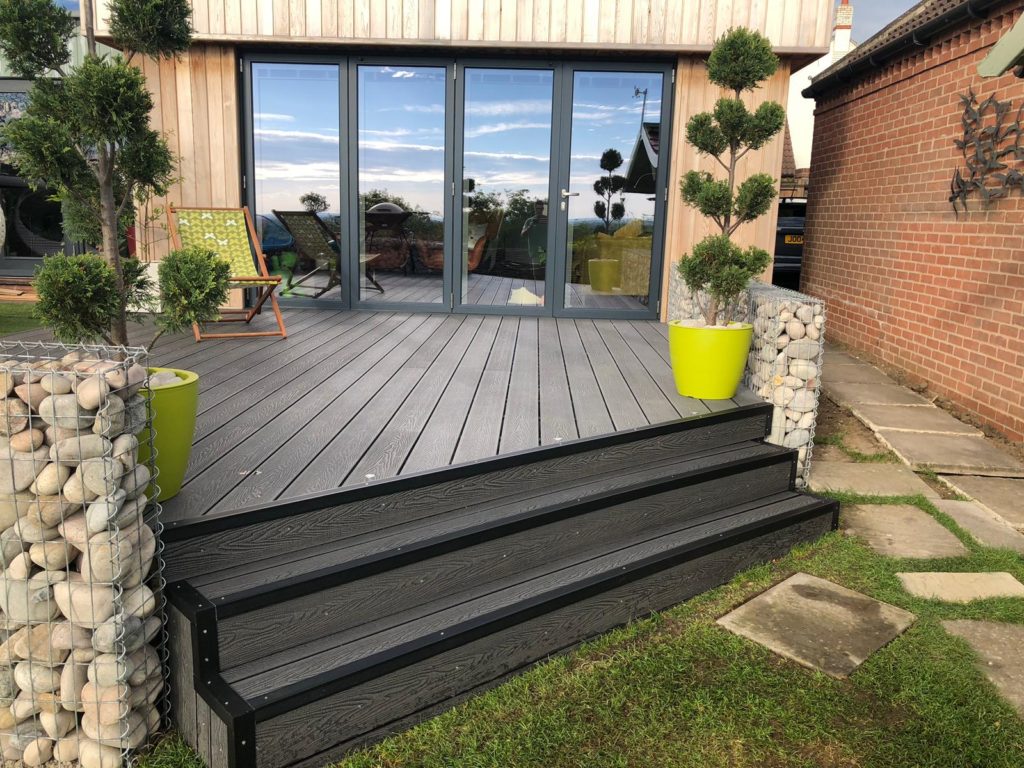
Proper installation is the foundation of a long-lasting composite deck. We always advise following manufacturer guidelines carefully, paying close attention to expansion gaps, subframe spacing and fixing methods. Using the recommended clips and fasteners ensures consistent spacing and allows the boards to move as designed. It’s equally important to install your decking in suitable weather conditions where possible, as extreme temperatures at the time of fitting can affect initial board positioning.
Download Our Composite Decking Installation Guide
In short, composite decking does contract and expand, but this is entirely normal. When installed correctly with the right allowances, this natural movement won’t compromise the strength, safety or visual appeal of your deck. In fact, composite decking remains one of the most stable and low-maintenance options available for modern outdoor spaces.
Only Use the Best Composite Decking
If you’d like expert advice or are looking for long-lasting, top quality composite decking for your project, we’re here to help. Get in touch with us today and let us help you create a beautiful deck that’s built to perform in every season.
